

Powder metallurgy

We are active in the field of powder metallurgy in the area of obtaining advanced engineering and functional materials by sintering powders of metals, ceramics, metal matrix composites (MMCs), ceramic matrix composites (CMCs), nanolaminar multilayer carbides (MAX phases), and poorly sinterable materials using the FAST/SPS method. We conduct high-energy ball milling and mechanical synthesis of powders in a protective atmosphere with temperature and pressure control. Qualitative and quantitative studies of powders, bulk materials and thin coatings are carried out by X-ray diffraction XRD and GIXRD, thanks to access to the full ICDD PDF-4+ database.

Our products are used in the space industry, as well as in bioengineering or batteries. They are used to protect surfaces from corrosion or temperature.
SERVICES

1. Manufacture of materials by spark-plasma sintering technology

  • The spark-plasma sintering method allows sintering under high temperature and high pressure conditions. This offers the possibility of non-stoichiometric synthesis and obtaining solid sinters.
  • Rapid manufacturing of innovative materials difficult or impossible to obtain with traditional technologies
  • Possibility of sintering materials with melting points above 3000°C in up to tens of minutes (from powder to finished sinter).

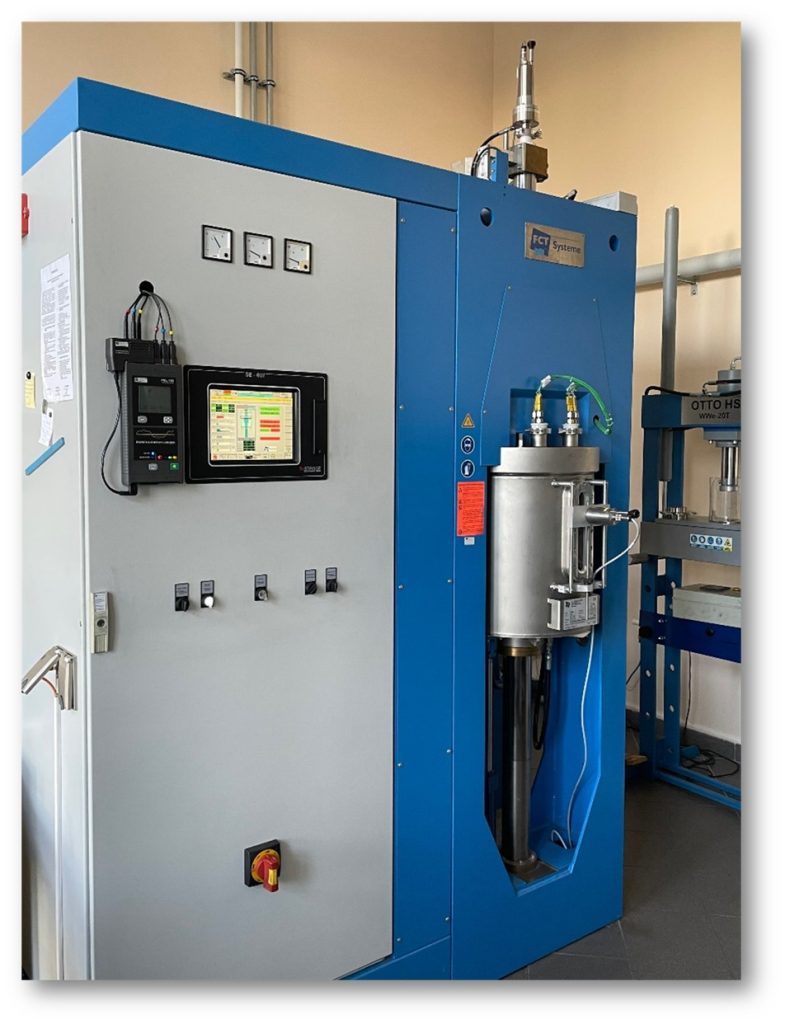
2. The largest SPS device in Poland

Parameter

Sintering temperature

Pressing force

Heating rate

Sinter diameter

Atmosphere

Value

up to 2200°C

up to 250 kN

up to 1000°C/min

up to80 mm

Ar, N2, H2, vacuum

Urządzenie do iskrowego spiekania plazmowego proszków SPS HP D 25

HP D 25/3

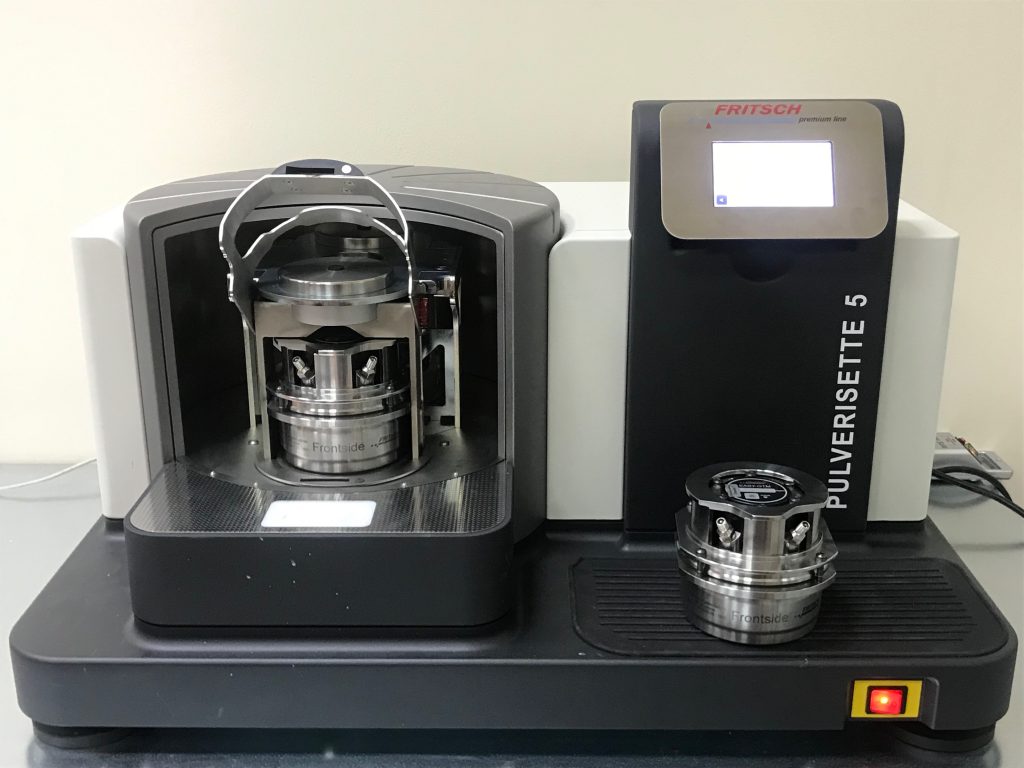
3. High Energy Ball Milling (HEBM)

Powder preparation is a very important step in sintering or spraying processes. In our typical studies, we use high-energy ball milling and mechanical synthesis of powders. A specialist can control the temperature and pressure during the milling process. Phase transformations can be controlled by X-ray diffractometry.

Parameter

Rotation speed

Material of milling vessels and bowls

Maximum milling vessel capacity

Milling atmosphere

Value

up to 500 rpm

WC-Co, ZrO2, stainless steel

250 ml

Ar, N2, He, air

Młynek planetarno-kulowy stosowany do mechanicznej syntezy

What else does powder metallurgy offer include?

Annealing in a protective or reducing atmosphere

It involves heating metal in a controlled gas environment (e.g. nitrogen, hydrogen), which prevents oxidation and allows the surface to be cleaned, improving the quality, uniformity of structure and mechanical properties of the material.

Vacuum drying

It involves removing moisture from materials under reduced pressure, which allows water to evaporate at a lower temperature, protecting sensitive substances from thermal degradation and oxidation.

Phase composition analysis (qualitative and quantitative) using XRD and GIXRD X-ray diffraction methods

Analysis of X-ray diffraction patterns reflected from an ordered crystal structure to identify material phases and their orientation.

Spark Plasma Sintering/SPS, spraying

Spark Plasma Sintering (SPS) is a method of rapid sintering of powders using pulsed current and pressure, while spraying is a technique of applying coatings by depositing particles of material onto a substrate.

Vacuum Cold Spraying/VCS, Aerosol Cold Spray/ACS

Vacuum Cold Spraying (VCS) and Aerosol Cold Spray (ACS) are low-temperature spraying methods in which material particles are accelerated in a carrier gas (in a vacuum for VCS or in an atmosphere for ACS) and deposited on a substrate without melting.

MAX phases, cemented carbides, composite materials

MAX phases are layered materials combining the properties of metals and ceramics, sintered carbides are hard composite materials used in cutting tools, and composite materials are a combination of different components that improve mechanical properties.

Qualitative and quantitative phase analysis using X-ray diffraction (XRD)

It involves identifying the phases of a material and determining their quantities by examining the diffraction patterns of X-rays reflected from the crystal structure.

Mechanical synthesis

This is the process of producing alloys by mechanically grinding powders of pure elements or alloys in high-temperature ball mills.

Zestaw narzędzi do prasowania proszków metali - matryca i tłoki

See also services in the field of heat and thermochemical treatment of metals.

    Our expert:

    Maria Wiśniewska

    Phone: +48 61 657 05 55

    Łukasiewicz research Network – Poznań Institute of Technology, Centre for Sustainable Economy, Research Group for Materials Engineering, 14 Jana Pawła II Street, 61 – 139 Poznań, Poland

    Maria Wiśniewska, ekspertka Łukasiewicz - PIT w dziedzinie metalurgii proszków