






How can we save bees from extinction? Scientists are looking for solutions to the decline of bees
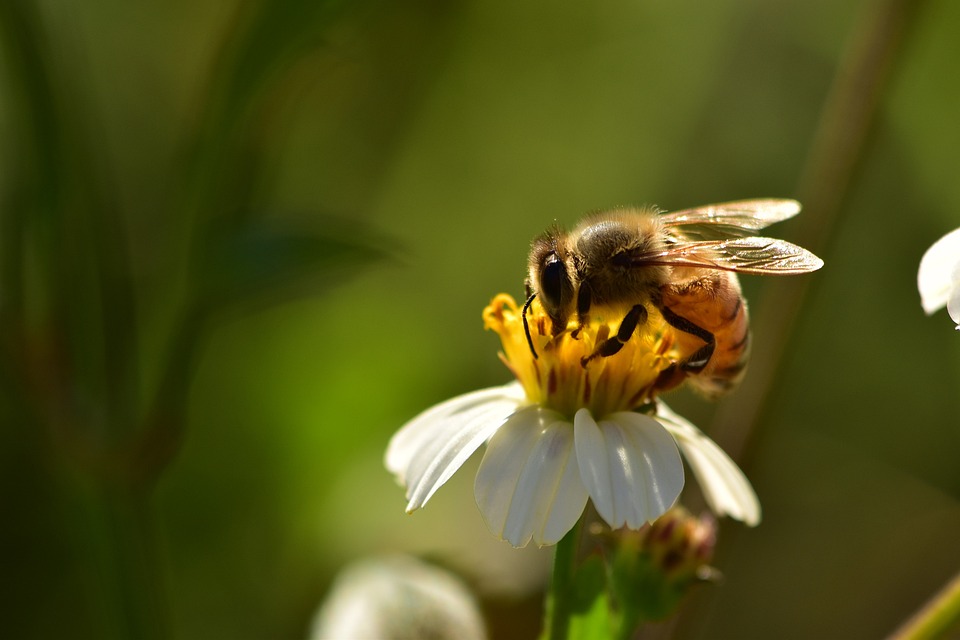
“When the bee dies out, mankind will only have four years left” – this quote is attributed to Albert Einstein; however, these are not his words. This sentence appeared in a brochure published by the National Union of French Apiculture in the first half of the 1990s. Even then, a worrying decline in the bee population was observed around the world. How much truth is there in this, and are we really facing a catastrophe in the face of mass bee extinction?
The honeybee has been declared an endangered species, and despite extensive research, the cause of his phoneme is still unknown. What is interesting, according to portalpszczelarski.pl, in 2020, Poland noted an increase in the number of bees to 1.6 million colonies. However, this does not translate into honey harvests, which are decreasing year by year.
Work and eat
They say,: as busy as a bee – and that’s no exaggeration. The main task of these animals is to pollinate plants, both cultivated and wild. Someone must transfer pollen from the anthers to the stigma. In some plants, this is done by the wind, in others by animals. If they are not pollinated, they will produce a negligible number of fruits and seeds. Even self-pollinated plants need insects (cross-pollination from the plants of the same species) to allow them to produce higher yields of better quality and seeds with greater utility value.
Up to 90 percent of wild plants, and up to 75 percent of cultivated plants, need pollination to reproduce. Scientists estimate that one-third of the food consumed by people is produced thanks to bees. And as one might guess, it is not just honey. Greenpeace even calculated how much the work of these pollinators is worth. It amounts to €265 billion annually worldwide (data from 2013; this amount was determined based on the values of crops dependent on pollination) and PLN 4.5 billion in Poland alone (data from 2015).
Why do bees work so much? Because they must feed themselves and their families. Their food is nectar and pollen, from which they produce honey and wax in the hive. The bee colony has a strictly defined structure, headed by the queen, with thousands of workers below her who obey her pheromone signals. In spring, drones, the male bees, appear in the hive. Little insects have high nutritional needs, which is why forager bees have a lot of work to do. They can fly several kilometers, and what’s interesting, they collect pollen and wax from one flower species (that’s why we have linden or rapeseed honey).
There are 470 bee species in Poland, whereas almost half of them are endangered of extinction. The most well-known species is the honeybee, cultivated in an apiary and living wild in the forests. Bees are not the only pollinating insects – this group also includes bumblebees, butterflies, and beetles.
Fly out and never return
During the 1970s, beekeepers noticed that the population of these animals was beginning to decline, and they were becoming more prone to diseases. It is estimated that the average mortality rate of these insects in Europe was 20–60 percent. Bees were losing their ability to learn and navigate (normally, forage bees can report to other family members where the plants, from which they obtained pollen and nectar, are). A phenomenon called Colony Collapse Disorder was described. Usually at night, bees leave the hive in mass and never return. The cause of CCD is unknown, and neither is the solution. The most likely causes of CCD include viral disease, parasite mites, fungi, agricultural pesticides, and poor hygiene.
What affects bee extinction and deterioration in bee health? A combination of factors, including disease and parasite, the use of chemicals in agriculture, industrial farming practices, and climate change.
Poisoned bees
Modern agriculture relies on the use of various plant protection products to provide nutrients, protect against diseases and pests, and eliminate weeds. Insecticides are like a double-edged sword, killing both insects that are harmful to plants and pollinators that are essential for their development. In its report “Spadek populacji pszczół” (“Bee population decline”) Greenpeace writes that the insecticides cause physiological changes in these insects, disturb the behavior patterns of foraging bees (e.g., their ability to navigate and find their way back to the hive), disrupt feeding processes (discourage them from eating pesticide-sprayed plants, impair their senses of smell), and affect their learning process (e.g., loss of olfactory-gustatory memory, flower recognition). As Greenpeace highlights, the potential damage caused by the use of pesticides outweighs the benefits.
The most harmful pesticides for bees are those from the neonicotinoid group, which penetrate the plant’s body and are distributed inside it – they are also therefore present in pollen and nectar. Even small doses are toxic to bees. In 2018, the European Union almost completely banned the use of neonicotinoids.
Industrial agriculture itself contributes to the decline in the population of many species, including bees. Until now, these wild areas have been taken over for cultivation (monoculture). Animals are losing their habitats and feeding grounds. Lack of diversity, expansion of monocultures – it all has an impact on the abundance of many species. Field boundaries, hedges, meadows, and unused fields are disappearing as they are being converted to farmland, which means that bees are sometimes unable to collect enough food.
The solution here is organic farming, which, thanks to the use of biodiversity, habitat diversity, and the elimination of chemical plant protection products, has a positive impact on the life of pollinating insects.
Climate change, which has a negative impact on many animal species, also affects bees. It can cause, for example, “a shift in the seasons”, which means that plant blooming may no longer coincide with the spring development of bee colonies.
As if the threats posed by humans were not enough, the bee population is also being decimated by diseases and parasites. Most of them are invasive species that bees are unable to overcome through natural adaptation. The biggest pest here is Varroa destructor, known by its Latin name Varroa mite. This arachnid, native to Asia, has already spread almost all over the world. It is the size of a pinhead and spreads quickly between apiaries and hives, causing a disease called varroosis, which leads to weakening and death of bees. In addition, it can infect them with infectious diseases.
Another dangerous parasite is Nosema ceranae, a single-celled organism that attacks the digestive system of bees. It causes an infectious disease called nosemosis, which results in malnutrition and weakness of the insects, and ultimately death.
Torment the tormentor
The problem with bee parasites is that the measures that could be effective cannot be used because they contaminate honey and wax. The search continues for ways to protect bees from parasites and, in the event of an infestation in the hive, respond quickly and safely.
Scientists from Łukasiewicz – Poznań Institute of Technology combine forces with Wielkopolska Agricultural Advisory Center and together are working on a device that will help beekeepers efficiently combat bee torment. They developed a beehive surveillance system with elements used to eliminate varroosis. The device observes the behavior and work of bees in the hive, alerting if any diseases appear. By using a varroa control system inside the hive, its occurrence in the bee colony can be reduced.
The device also allows you to set the temperature inside the hive, its ventilation, and measures the temperature, humidity, and carbon dioxide levels, so you can determine whether the bees are in a swarming mood.
Therefore, the beekeeper will always know what is happening in the hive. They will also receive theoretical support in the form of instructions – a methodology for action.
We sow meadows
You don’t have to be a scientist to help bees. It is enough, for example, to reduce the frequency of mowing the lawn (this will also bring other benefits to the environment, such as water retention), and plant-pollen and nectar-producing plants in the garden (e.g., crocus, tulip, tamarisk, gooseberry, barberry, raspberry, linden, hawthorn, maple, cherry, rose, sea buckthorn). Many of these plants are perfect for planters, so you don’t need to have a garden. Garden stores sell special seed mixed for pollinators – for creating flower meadows. And for guerrilla gardening enthusiasts – seed bombs that can be thrown on wasteland or neglected areas, so that one day they will burst into bloom.
Another method is also to hang a house for pollinators. You can buy it in many shops or make it yourself.
And most importantly, look at bees differently. Not through a prism of a potential sting, but with gratitude for the work they do.
FIND OUT MORE

15 March 2023
Will a vegeburger replace a burger? And what’s the deal with the insects?
22 March 2023
About water without waffling. Because it can run out.

15 February 2023
Why do we eat donuts on Thursday? And how do regions shape our culinary taste?

8 February 2023
Ultra-durable materials. Will Polish scientists conquer space?
 SEE ALL BLOGS