

Logistics consulting

We design effective logistics solutions, both at the level of process organization and logistics infrastructure, including:​

  • designing transport management systems,​
  • designing warehouse organization and technology, including distribution/production centers,​
  • designing inventory management algorithms.

We offer logistics solutions for companies from various industries and with different business profiles.

SERVICES

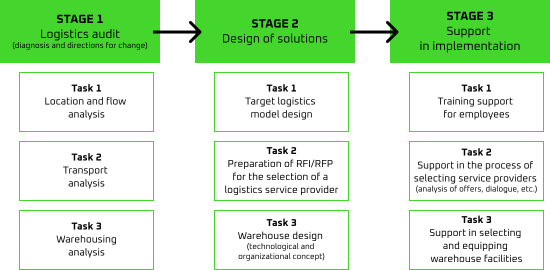
What is logistics consulting? Learn about its stages:

At Łukasiewicz – PIT, we operate sequentially – logistics consulting consists of auditing, project preparation, and implementation – separate modules. We use them to compose an offer tailored to the individual needs of the customer. Learn about these three sequences:

Logistics consulting – what can you expect from it?

We have over 50 years of experience in logistics consulting and hundreds of completed projects

We use proprietary methodologies, software programs, and applications

We use GIS tools for data visualization and spatial analysis

The scope of work is tailored to the needs of our customers

The design work takes the form of interactive workshops with the client

In order to understand the specifics of the business, we conduct site visits at the customer’s premises

The modularity of analytical work allows its scope to be tailored to specific needs

We take into account aspects related to the application of ESG principles in logistics

Logistics cosulting - our offer

1. We will conduct a logistics audit for you:

The audit may cover the company’s activities in various areas of logistics, such as transport, warehousing, and inventory management.

The audit covers both process analysis and indicator analysis to assess the effectiveness of activities in a given area.

The aim of the audit work is to identify and assess the current state of logistics in a given area and to indicate possible changes aimed at optimizing logistics activities and costs.

The results of the work will enable the company’s management to make rational investment decisions in order to effectively handle the projected goods flows and warehouse stock.

Mapa Polski z zaznaczonymi lokalizacjami, są intensywne przyjęcia i wydania towarów w magazynach

The logistics audit covers:

  • identification and assessment of the logistics network structure, the specific nature of customer logistics services provided within individual sales channels, taking into account their specific characteristics,
  • presentation of recommendations forming the basis for assessing the possibility of optimizing logistics costs for defined (as part of further work) alternative variants of sales logistics services.

4 stages of a logistics audit:

1.

We will diagnose the current state of logistics

2.

We will determine the level of logistics indicators

3.

We will indicate directions for possible improvements

4.

We will estimate the costs associated with their design and implementation

2. We will propose effective solutions for transport:

We design organizational solutions that reduce costs and increase transport efficiency.

We develop optimal transport models, including through the selection of route planning algorithms and the determination of the target fleet structure.

We determine the terms of cooperation with external transport operators. We provide support in selecting a transport service provider.

We are investigating ways to reduce the emissions of the transport solutions we use. We calculate the carbon footprint of transport.

Mapa Polski przedstawiająca optymalne trasy transportu, na zielono

Analysis of transport processes:

  • development of alternative logistics organization options,
  • verifying the proposed logistics scenarios in terms of their effectiveness,
  • using advanced ArcGIS Pro simulation tools with the Network Analyst add-on,
  • conducting simulations that take into account the size of individual vehicle groups and the specific characteristics of network points, including their individual features and limitations,
  • conducting simulation analyses of transport processes using information on the current layout of municipal, county, national, and expressway roads, taking into account their limitations,
  • support in defining the transport needs of the customer’s logistics chain,
  • support in formulating requests for information (RFI) and requests for proposals (RFP) to carriers and logistics operators regarding the provision of transport and warehousing services,
  • analysis of the current state of transport logistics organization.
  • Identification of areas for optimization and changes in the organization of the process,
  • support in selecting a carrier that suits the specific nature of the customer’s supply chain.
Wykres przedstawiający zależność pomiędzy liczbą zleceńtransportowych a kosztami transportu. Na wykresie słupkowym przedstawiono liczbę zleceń transportowych, a na nałożonym na niego wykresie liniowym - odpowiadające danej liczbie zleceń koszty transportu

We design effective transport solutions both at the domestic transport level and with regard to international transport, depending on the scope of the customer’s business. We take into account the use of road transport and assess the potential of other modes of transport (rail, sea, air) and the implementation of intermodal transport.

3. We will implement a technological and organizational concept for the warehouse.

We will develop a concept for the optimal organization of warehouse processes and warehouse operations, designing effective methods for handling inventory and all types of material/raw material/goods/finished product flows in the warehouse.

We will select the most effective warehouse equipment, including devices for storing and handling product flows, and design its optimal layout within the warehouse space.

We will recommend the most effective means of internal transport.

We will assess the potential and feasibility of implementing warehouse automation solutions.

We will design effective methods for identifying products and objects in the warehouse and for effectively monitoring warehouse processes.

Rzut poziomy magazynu wysokiego składowania z zaznaczonymi miejscami paletowymi i przejściami roboczymi.

More benefits of warehouse reorganization:

Maximizing the use of warehouse space and effective development of the investment plot

Effective handling of forecasted warehouse flows

The most effective warehouse technologies dedicated to storage and flow handling

Increased efficiency and reliability of warehouse processes

Lower warehouse operating costs

What does the optimization of a logistics model (distribution network) look like?

zielone punkty połączone zielonymi cienkimi liniami, abstrakcja

Design and development of an optimal goods distribution network model, taking into account the improvement of logistical efficiency in the context of sales operations across various channels (including e-commerce).

Mapa przedstawiająca model sieci dystrybucji
ikona w kształcie domu, delikatny obrys zielonych linii

Determining the optimal number and location of warehouses and distribution centers, along with designing rules for the organization of flows and the functioning of logistics in all areas.

Mapa przedstawiająca model sieci dystrybucji
Dłonie osoby piszącej na klawiaturze laptopa

Please contact us if you would like to:

  • develop a good storage plan for your distribution centers,
  • obtain professional and comprehensive logistics consulting,
  • increase the efficiency of logistics management in your business.

    Our expert:

    Marta Cudziło

    Phone: +48 609 149 560

    Łukasiewicz Research Network – Poznań Institute of Technology, Centre for Modern Mobility, Research Group for Logistics, 6 Ewarysta Estkowskiego Street, 61-755 Poznań, Poland

    Marta Cudziło, ekspert Łukasiewicz - PIT w dziedzinie logistyki
    etlog on white rectangle

    Discover ETLOG, our proprietary program for designing and printing logistics labels.