






Why do we eat donuts on Thursday? And how do regions shape our culinary taste?
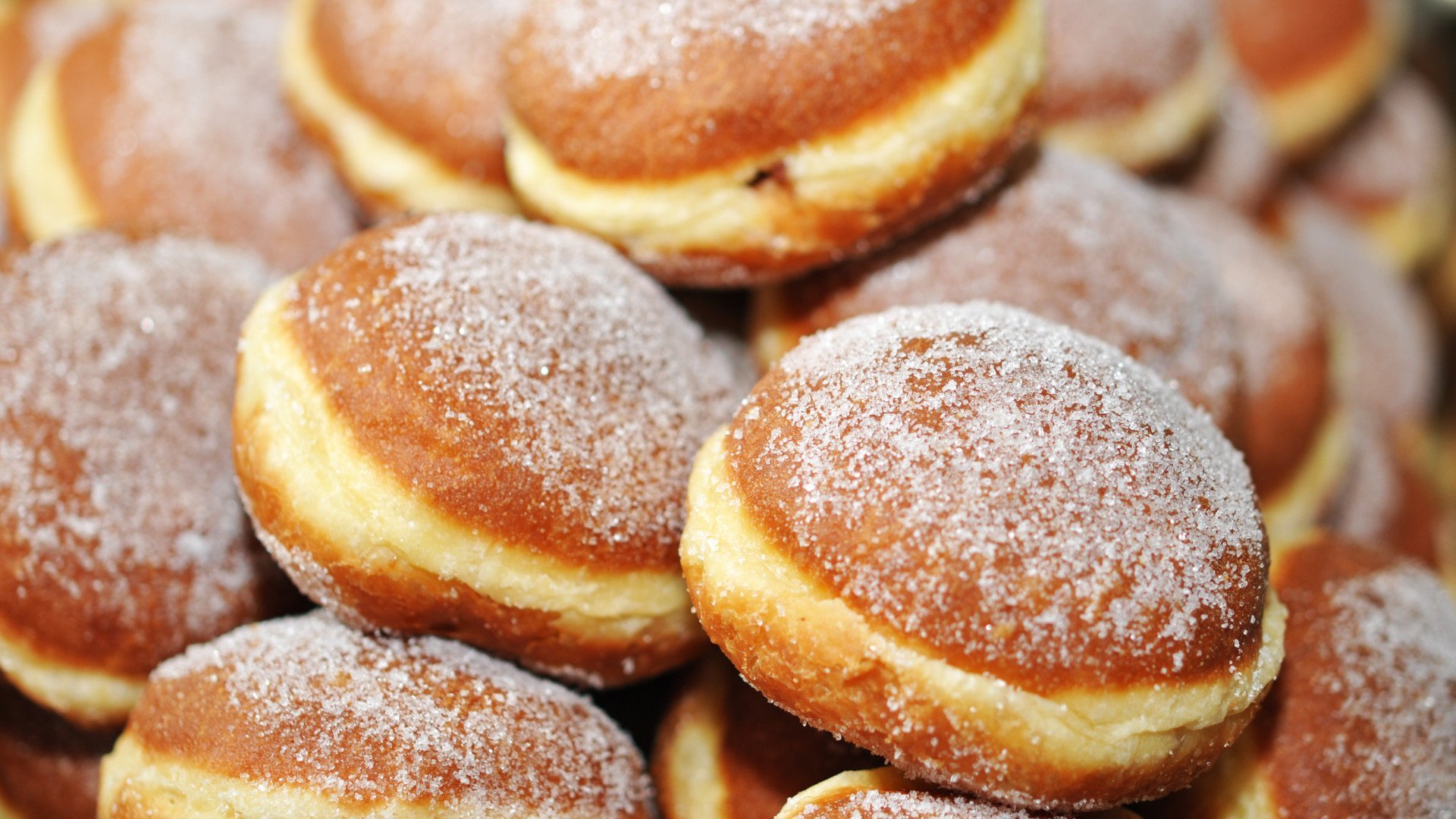
Fat Thursday is a day when, exceptionally, we don’t count calories or look strictly at our diet but instead gorge ourselves on doughnuts and faworki (angel wings). According to calculations by BNP Paribas from February 2020, Poles consume an average of 2.5 doughnuts per person on Fat Thursday. In total, we eat around 100 million sweet pastries with various fillings.
Interestingly, the research conducted in 2017 by Tesco shows that only 4 percent of Poles did not intend to eat any doughnuts at that time. In contrast, over 47 percent of Poles planned “to have a bite” of three to five donuts. In this group, men aged 18 to 30 are by far the biggest gourmands.
According to data from GfK Polonia, consumer preferences are not related to the current place of residence, origin, or size of the town, but rather to whether people have children. In short, the most doughnuts are eaten where the youngest Poles live.
Why do we eat donuts on Thursday?
The answer to the question in the title is very simple – because of religion. Fat Thursday is the last Thursday before Ash Wednesday (the beginning of Lent) in the Christian calendar, when overeating is allowed. This is when the final week of carnival begins.
In the past, people used to eat doughnuts filled with bacon, sausage, lard, or meat. The custom of baking sweet doughnuts and crispy angel wings has survived to this day. The latter appeared in the 16th century during the reign of Sigismund II Augustus. At that time, instead of sweet fillings, peanuts or almonds were hidden inside, and whoever found them was to enjoy good luck for the rest of the year.
The origins of Fat Thursday date back to pagan times, when the end of winter and the arrival of spring were celebrated. At that time, the Romans ate fatty foods, especially meat. They were accompanied by doughnuts made from bread dough and stuffed with lard.
What kinds of donuts do we eat?
According to confectioners from different parts of the country, Poles most often choose doughnuts filled with rose jam and topped with icing. Among the less traditional varieties, those with advocaat or chocolate dominate. Donuts with fillings resembling well-known products (e.g., Kinder Bueno), with a salty calmer flavor, filled with exotic fruit jam, or topped with colorful icing, are also becoming increasingly common on our tables.
In January 2023, everyday products most frequently purchased by Poles increased in price by an average of 20 percent. Therefore, a slightly higher price for doughnuts compared to previous years should be expected. Three factors influence this change: the costs of semi-finished products, employee maintenance, and overall logistics.
The cheapest donuts can be found in popular discount stores and supermarkets, but they are machine-made and baked from deep-frozen dough using ready-made flour mixes. Artisanal doughnuts are characterized by a more irregular shape.
How do regions shape our culinary taste?
Nearly every region of Poland, large or small, is distinguished by customs cultivated for generations, including those relating to food. Since Łukasiewicz – PIT operates in Poznań, this part of the article will focus mainly on sweets from Greater Poland.
Faworki (angel wings)
If this name sounds unfamiliar, it means you are most likely not from Poznań and the surrounding area. In Poland, thin, crispy pastries shaped like a bow or braid and sprinkled with powdered sugar are called chrusty or chruściki. However, in Greater Poland they have become popular as faworki.
The name “faworki” comes from a bakery called Fawor, located in Poznań, which has been operating for over 100 years. As the urban legend goes, the pastries were created there by accident. One of the beginner confectioners, while frying doughnuts, accidentally dropped a narrow strip of dough into the hot oil. After being reprimanded by an older colleague, they took out a piece resembling a braid, sprinkled it with powdered sugar…. and everyone enjoyed the new pastry. However, after a while, the production of faworki from donut dough was discontinued. Instead, the confectioner developed a completely different recipe to make the dough thin and crispy.
In the past, faworki were only created during carnival season, Fat Thursday, or on Shrove Tuesday, i.e., the Tuesday before Ash Wednesday. Nowadays, they are available in bakeries and pastry shops all year round.
Polish Nest Donuts (Gniazdka Poznańskie)
Another sweet treat associated with Poznań in its name (in Polish literally: Poznań Nest Donuts). Polish Nest Donuts are also known as Spanish or Viennese doughnuts; however, they do not originate from the capital of Greater Poland. They are made from choux pastry, i.e., a mixture of wheat flour, fat, and water. The dough does not contain any added sugar, so after baking, the doughnuts are covered with a thick layer of icing to give them sweetness.
On Fat Thursday, fluffy doughnuts will successfully replace traditional donuts. They taste similar to churros, traditional Spanish pastries made from choux pastry and sprinkled with powdered sugar or other sweet toppings.
St. Martin’s croissants
St. Martin’s croissants are probably the most famous sweet treat from Greater Poland. Shaped like a horseshoe and made from puffy pastry, filled with poppy seed filling with added dried fruit and nuts, covered with icing and sprinkled with chopped nuts, they have remained popular among the residents of Poznań and the surrounding area for many years.
According to various accounts, the tradition of eating croissants dates to 1891. At that time, the parish piers of St. Martin’s Parish, Father Jan Lewicki, called on his parishioners to do something for the poor on November 1, just as their patron had done several centuries earlier. Confectioner Józef Melzer, who was present at the sermon, persuaded his superior to revive the old tradition and bake croissants. These were distributed to the poor after the indulgent mass.
In turn, according to the website Dawnypoznań.pl, referring to historical records, e.g., newspaper clippings, the tradition of eating croissants began at least 31 years earlier. It was in 1860 that the first known and documented advertisement of “St. Martin’s croissants” was published.
In 1901, the tradition of baking croissants was taken over by the Association of Confectioners. The tradition survived the turbulent times of Poland regaining independence and the victorious Greater Poland Uprising, followed by World War II and Soviet domination.
Now, every year, the inhabitants of Greater Poland consume up to 500 tons of St. Martin’s croissants. For a bakery to use this name, it must obtain a certificate from the Kapituła Poznańskiego Tradycyjnego Rogala Świętomarcińskiego (The Chapter of the Poznań Traditional St. Martin’s Croissant), established on the initiative of the Cech Cukierników and Piekarzy in Poznaniu (Guild of Confectioners and Bakers in Poznań), Izba Rzemieślnicza (Chamber of Crafts), and Poznań City Hall.
The certificate clearly stipulates the use of margarine in the production of puffy pastry. However, some artisan bakeries deliberately use butter, thereby foregoing the original name. They point to the improvement in the quality and taste of such pastries and cite old recipes in which confectioners use both vegetable fats and butter.
Szneka z glancem
Pastry steeped in the name of the Greater Poland dialect. Szneka is a type of sweet bun/yeast cake shaped like a snail shell and made from yeast dough. The name comes from the German word schneke, meaning snail. Szneka is topped with glaze, i.e., icing, and crumble. The more crumble, the better.
In the past, szneka was prepared only with icing. As the economic situation improved, housewives began to use larger amounts of butter, and thus add crumble to szenka, i.e., a topping made of flour, butter, and sugar.



 SEE ALL BLOGS