






When and what to do with the Christmas tree after the holidays?
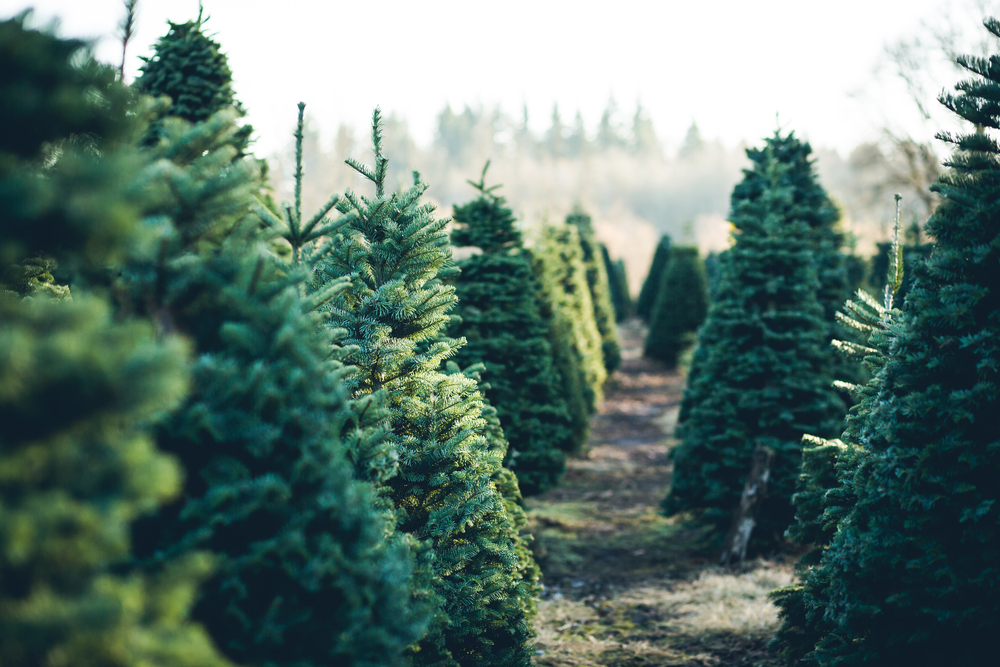
The Christmas tree has a special place in Christmas tradition. It symbolizes rebirth, and its green color symbolizes hope and eternal life. According to research, as many as 90% of Europeans say that the tree is an important symbol of Christmas for them. This is clearly visible in the landscape of European cities, where large Christmas trees often appear during the holiday season, attracting residents.
The tree is traditionally decorated with a star of Bethlehem (guiding the Three Kings), chains (a symbol of unity), fruit (apples as a sign of the biblical fruit from the tree of knowledge of good and evil), sweets (a symbol of joy) and lights (symbolizing the coming of Jesus Christ).
When should the Christmas tree be taken down? According to Catholic tradition, after Epiphany or on the following Sunday, when the liturgical Christmas season ends. The last option is February 2, the feast of Our Lady of Candlemas.
Karol Tomczak, a specialist in lignocellulosic raw materials at the Centre for Sustainable Economy at the Łukasiewicz – Poznań Institute of Technology, provided expert support in the creation of this material.
Where does the Christmas tree come from?
The Christian tradition of decorating a Christmas tree originated in Protestant Alsace. Christmas trees were decorated with paper decorations and apples, which referred to the biblical tree of knowledge of good and evil, known from the parable of Adam and Eve.
The propagator of this custom was the reformer Martin Luther, who claimed that Christmas was best spent in the comfort of one’s own home. That is why Christmas trees first gained popularity in Protestant Germany, where they were hung from the ceiling, with the top pointing downwards. From there, they then made their way to France.
The Catholic Church adopted the custom of decorating trees a little later, bringing it to northern and central Europe. Thanks to Queen Victoria of Great Britain, this tradition gained popularity throughout Europe and even America.
The tradition of decorating trees came to Poland from Germany at the turn of the 18th and 19th centuries. Initially, it spread only in cities where German settlers lived. It was only later that the custom spread throughout Poland, dethroning the podłaźniczka, a folk decoration made of pine, fir, or spruce branches hung from the ceiling, or a decorated sheaf of grain called Diduch, known to peasants since pagan times.
Live Christmas trees dominate in Poland
What kinds of Christmas trees can we buy in garden centers, local markets, or private plantations? We distinguish between cut trees (single-season) and potted trees. According to the website Polskiechoinki.org, 80 percent of households buy natural Christmas trees. Only 10-15% buy plastic ones. “Live” trees are becoming increasingly popular.
Another option is to buy an artificial Christmas tree made of synthetic materials. Such a tree will serve us for several seasons, because in the summer it can be stored in a garage or basement. Unfortunately, in this case, it is difficult to enjoy any fragrance.
What types of “live” Christmas trees are available for sale?
Norway spruce – the most popular conifer in Europe. It has a regular cone shape, but its needles are prickly and fall off relatively quickly. Therefore, it is steadily losing popularity compared to other types of trees.
Silver spruce – a species that came to us from North America. It has blue-silver needles, hence its name. Its biggest drawback is its prickly needles.
Caucasian fir – the most noble Christmas tree native to the Caucasus region. For several years now, it has been the most popular tree in Poland and throughout Europe. It is distinguished by its regular shape and long, dark green needles, which are soft and do not fall off for a very long time.
Pine – one of the most popular conifers in Northern and Central Europe. Like the fir, it does not shed its needles, but it is characterized by an irregular shape. However, it has an incredible advantage – an intense, resinous scent that fills the entire house.
Douglas fir – a type of coniferous tree from the pine family. It resembles a cross between a spruce and a fir tree. It has a conical and pointed crown. It emits a pleasant citrus-like scent, but it is not as intense as that of other conifers.
The most popular in Poland are the Norway spruce and the Caucasian fir. The latter has become particularly popular recently. In Silesia, however, pine is still used.
How long does it take for a Christmas tree to grow?
The length of the process of growing Christmas trees, or rather conifers, on private plantations or in forest nurseries belonging to the State Forests varies. First and foremost, it depends on the species and size of the tree we want to buy.
In the case of Scots pine or Norway spruce, the growth process will be significantly shorter than in the case of fir. In addition, during the growth process, the trees are regularly cared for by weeding, pruning and shaping the branches. We can assume that the cultivation of a medium-sized Christmas tree (up to 1.5-2 metres) can take between 6 and 10 years.
How to use a cut Christmas tree after the holidays?
A cut Christmas tree should be shortened by a few centimetres (4-5) at the bottom and placed in a container with lukewarm water. You should also avoid overloading the tree with numerous decorations; it is better to go for minimalism. Then the tree should survive the entire Christmas period without losing its needles.
Once a tree has been cut down, it cannot be revived. However, this does not mean that we cannot give it a second life in a slightly different application. Here are some examples of sustainable use of Christmas trees that will help you fully exploit the potential of ‘used’ Christmas trees:
- chopping the Christmas tree into small pieces; in this form, our tree will work perfectly as mulch (fertiliser) for other plants in our garden;
- composting, in which case the chopped material should be placed in a home compost bin;
- if we do not have our own garden, the Christmas tree can be donated to one of the numerous collections organised by cities and municipalities. After seasoning, our Christmas tree will then be used as fuel for heating homes or will be turned into compost. The dates and rules for collections can be found on the websites of the relevant authorities.
What to do with a ‘used’ tree after Christmas?
It is important to remember that although wood and pine needles are biodegradable materials that decompose without harming the environment, Christmas trees should not be thrown away in forests, parks or rubbish bins. It is also not recommended to burn fresh wood in a stove. If you would like to use the wood from your tree as fuel, it must be seasoned* beforehand.
*Seasoning – storing wood in appropriate conditions to achieve a state that allows it to be burned.
FIND OUT MORE

18 January 2023
Facts and myths about artificial intelligence. What is AI?

25 January 2023
The most interesting European railway lines

22 December 2022
Couriers are doing their best, but fraudsters are waiting for their chance. The parcel rush is in full swing

16 December 2022
How did the whole world end up in the Persian Gulf?
 SEE ALL BLOGS