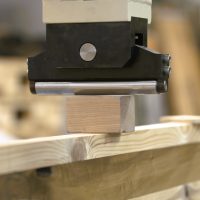


Surface testing

We are engaged in testing the resistance of surfaces to chemical, thermal, mechanical, humidity-temperature and other factors in accordance with the procedures described in Polish and international subject standards. Depending on the needs of customers, we conduct tests on the surface of elements made of: wood, wood-based panels, various types of plastics and metals, which are used mainly in the production of furniture, floors, interior furnishings, woodwork and small garden architecture.

ACCREDITED TESTING

We offer surface resistance testing in:

  • effect of light – PN-EN 15187:2007 ,
  • abrasion – PN-EN 15185:2011,
  • scratching and micro-scratching – PN-EN 15185:2012 and CEN/TS 16611:2016, respectively,
  • impact – PN ISO 4211-4:1999,
  • cold liquids and staining – PN-EN 12720+A1:2014-02,
  • heat – in dry test and in wet test – PN-EN 12721+A1:2014-02 and PN-EN 12722-A1:2014-02, respectively

Abrasion, scratching, impact, cold liquids and staining, heat in dry test and in wet test, steam and cracking – PN-EN 438-2+A1:2019-01

Abrasion, scratching, impact, cold liquids and staining, steam and cracking – PN-EN 14323:2022-04

abrasion, impact – PN-EN 13329+A1:2022-02, PN-EN 14354:2017-08, PN 13696:2009 and PN-EN ISO 5470-1:2017-02, respectively

At the accredited Laboratory for Surface Testing of the Łukasiewicz Research Network – Poznań Institute of Technology, we help manufacturers of furniture, flooring, interior design elements and other companies to ensure the highest quality and durability of their products through professional surface resistance testing.

Accreditation and testing standards

The Łukasiewicz – PIT Laboratory has accreditation confirming its competence to perform tests in accordance with international standards. Our tests are carried out in accordance with current Polish (PN), European (EN) and international (ISO) standards, including: PN-EN 15187, PN-EN 15185, PN ISO 4211-4, PN-EN 12720, PN-EN 12721, PN-EN 12722, PN-EN 438-2, PN-EN 14323, PN-EN 13329, PN-EN 14354, PN 13696, PN-EN ISO 5470-1]. We provide reliable and binding test results.

Abrasion resistance test (PN-EN 15185)

Abrasion resistance is a key parameter for surfaces exposed to intensive use, such as countertops, floors and office furniture surfaces. In our laboratory, we conduct precise abrasion tests in accordance with the PN-EN 15185 standard, using specialised equipment that simulates real-life conditions. The test allows us to assess how quickly a surface will deteriorate under friction and helps in the selection of appropriate materials and coatings. We offer abrasion tests for wood, laminates, plastics and other materials.

Light resistance test (PN-EN 15187:2007)

This test checks how the colour and appearance of a surface change when exposed to light, often simulating sunlight. It is crucial for furniture or flooring exposed to sunlight, preventing fading and loss of aesthetics. Samples are exposed to light in a special chamber and then compared with unexposed samples. It guarantees the colour stability of the product over a long period of use.

Scratch resistance test (PN-EN 15185:2012) and micro-scratch resistance test (CEN/TS 16611:2016)

These tests assess the resistance of surfaces to damage caused by sharp objects or small particles. They are important for furniture and decorative elements, protecting them from accidental defects. Scratch testing uses a stylus under load, while micro-scratch testing uses more delicate methods. They confirm the surface’s ability to remain smooth and aesthetically pleasing despite contact with sharp objects.

Impact resistance test (PN ISO 4211-4:1999)

This test determines the resistance of a surface to dynamic loads, such as a falling object. It is important for table tops, shelves and floors, which may be exposed to accidental impacts. The test involves dropping a weight from a specified height onto a sample of the material. It allows you to check whether the impact will cause cracks, chips or dents.

Tests for resistance to cold liquids and staining (PN-EN 12720+A1:2014-02)

It assesses the surface’s reaction to contact with typical household liquids, such as coffee, juices or oils, at room temperature. It is crucial for kitchen and dining surfaces, testing durability against damage and the ability to remove stains. Liquids are applied to the sample for a specified period of time, and then the resulting changes and stains are assessed. Ensures ease of cleaning and resistance to everyday dirt.

Tests for resistance to heat in dry and wet conditions (PN-EN 12721+A1:2014-02 and PN-EN 12722-A1:2014-02)

These tests check the surface’s resistance to contact with hot objects, both dry (e.g. a hot pot) and wet (e.g. a cup with a hot drink). They are essential for kitchen worktops and tables exposed to high temperatures. They involve briefly applying a heated element to the surface (dry or with damp paper). They allow you to assess whether high temperatures will cause discolouration, blistering or cracking.

Logo organizacji ilac-MRA w kolorze niebieskim na przezroczystym tle

Our reports are recognized in all countries that are signatories to the ILAC MRA multilateral mutual recognition agreement.

See also our offer of physical and mechanical testing of wood materials and products

Prasa do gięcia drewna, urządzenie obróbcze do profilowania elementów drewnianych

    Our expert

    Magdalena Nowaczyk-Organista

    Phone: +48 693 091 270 | +48 61 849 24 45 Łukasiewicz Research Network – Poznań Institute of Technology, Centre for Laboratory Testing (Laboratory for Material Testing), 1 Winiarska Street, 60-654 Poznań, Poland
    Osoba trzymająca na kolanach laptopa w kolorze srebrno-czarnym, pisząca na klawiaturze