






Ground for innovation
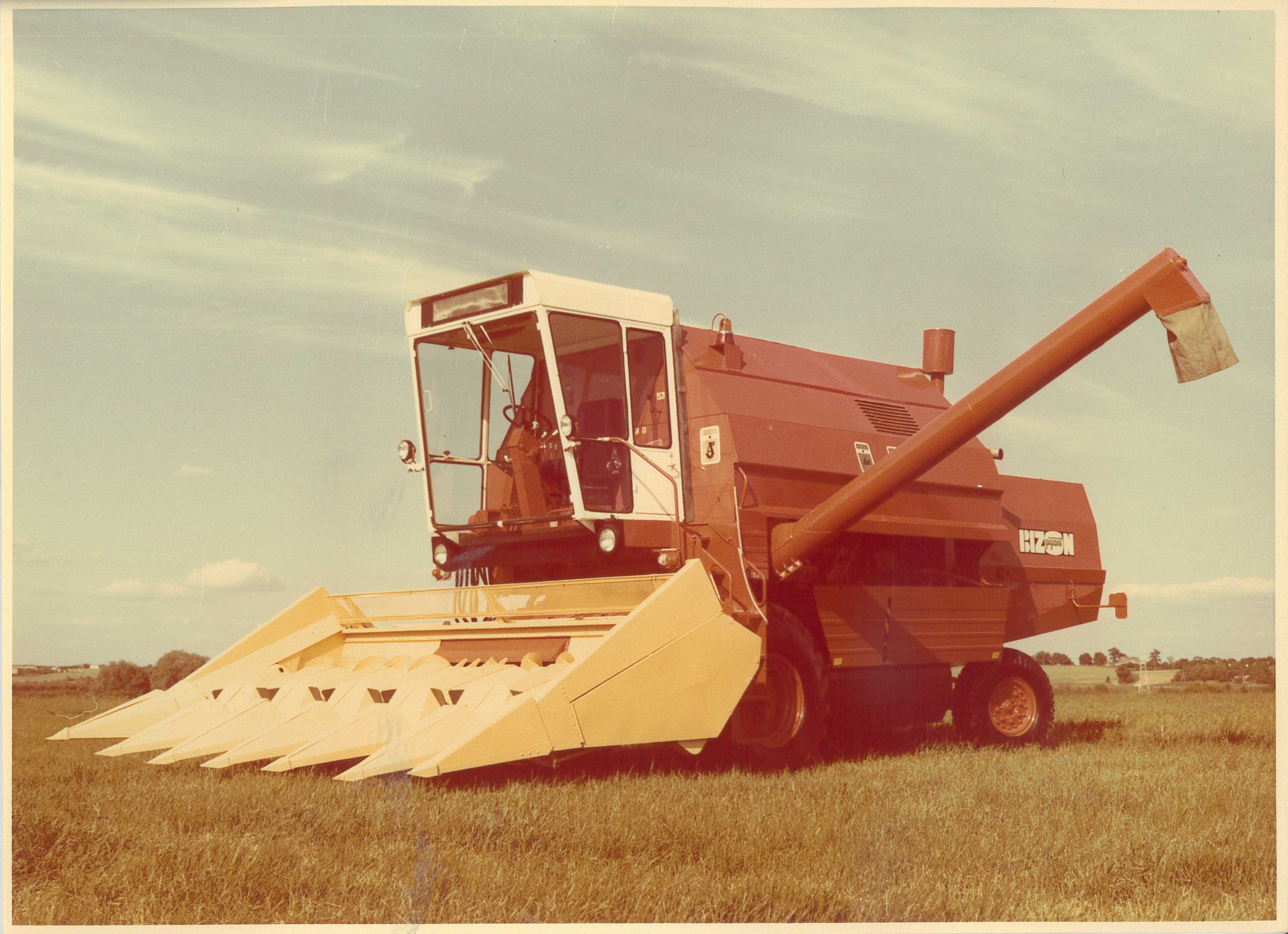
The 80 years of activity of the Industrial Institute of Agricultural Engineering, currently part of Łukasiewicz – PIT, represent a significant part of the history of agriculture in Poland. The first designers created machines that were operated by horses. Today, their successors are involved in the use of drones and autonomous vehicles.
In 1946, on the recommendation of the then Ministry of Industry (and inspired, among others, by the Agricultural Machinery Sales Centre in Łódź), the Central Design Office for Agricultural Machinery (CBKMR) was established. The unit was tasked with ‘developing and improving the design of agricultural machinery and tools’ and thus supporting the post-war reconstruction of the country’s economy.
Officially established on 1 March, the Office initially had two positions: a technical position (held by engineer Stanisław Żaliński, who was entrusted with the mission of establishing the CBKMR) and a secretarial position (held by Zofia Młokosiewicz). It was located in two rooms at 136 Daszyńskiego Street in Poznań. In December, the location was changed to 11 Roosevelta Street, where the number of rooms and… employees doubled. Unfortunately, a lack of money and, perhaps most importantly, qualified engineering staff hindered the further development of the Office. It was therefore necessary to wait for the first post-war graduates of the Engineering School in Poznań, who appeared two years later. Among them were three people specialising in the construction of agricultural machinery. The young engineers were educated under the watchful eye of Żaliński himself.
From August 1948, the financing of CBKMR’s activities was taken over by the ‘Unia’ factory in Grudziądz, and substantive supervision by the Union in Łódź. Then, by order of the Minister of Heavy Industry of 31 December 1949, the name was changed to Central Design Office No. 3 (CBK-3) – Separate State Enterprise.
Development in Starołęka
In March 1953, (CBK-3) moved to a building on Starołęcka Street on the premises of the ‘15 Grudnia’ Agricultural Equipment Factory, and this location proved to be its final one. The new two-storey headquarters provided an opportunity for even more intensive development. Further transformations of the Office took place in 1954, when it became the Institute of Agricultural Machinery (IMR), and then in 1960, when the Industrial Institute of Agricultural Machinery (PIMR) was established, significantly subordinated to the Union of Agricultural Machinery Industry.
Initially, the newly established Institute comprised three research departments: the Agricultural Machinery Department, the Agricultural Tools Department, the Livestock and Farm Equipment Department, and the Technical Information and Documentation Department. The latter even began to publish its own periodicals: ‘Documentary Review of Tractors and Agricultural Machinery’, ‘Patent Information’ and ‘Information Bulletin of the Institute of Agricultural Machinery’.
The dynamic development of the PIMR departments resulted in 1961 in some of them being granted the role of Industry Centres for Standardisation and Scientific, Technical and Economic Information. The latter, headed by Dr Adam Górski, was one of the first in Poland to deal with patent documentation, patent jurisprudence and the protection of industrial property rights.
Interestingly, even at that stage of PIMR’s activity, emphasis was placed not only on the functionality of the developed solutions, but also on their aesthetics. In order to improve the visual qualities of tractors and agricultural machinery, an innovative Industrial Design Studio was established.
At the end of the 1960s, the PIMR team, together with the Experimental Design and Prototyping Department – ZDKP (operating independently, whose activities significantly reduced production time, thanks to which the Institute was able to provide factories with almost ready-made solutions), exceeded 700 people. At that time, most of the agricultural machinery produced in the country was the result of work carried out at PIMR.
Direction: research
At the turn of the 1970s and 1980s, with the development of factory-based research and development centres and experimental plants, PIMR had to move away from design and prototyping work. At that time, the demand for cognitive, developmental, prognostic, diagnostic and certification research increased, while the number of employees fell to 350. However, in 1985, the Institute was entrusted with the coordination of the Central Research and Development Programme ‘Agricultural Machinery and Tractors’ by the Committee for Science and Technology, which was a great success.
Unfortunately, due to socio-economic changes, the 1990s brought the need for restructuring, including the liquidation of ZDKP. At that time, however, the accredited Agricultural Machinery Research Laboratory was developed.
Over the course of seventy-five years of operation, PIMR has contributed significantly to the development of Polish and global agricultural technology and the agricultural machinery industry. The institute has completed hundreds of research and development projects, receiving dozens of awards in recognition of the innovative nature of its research work. Over the years, several hundred machine prototypes have been constructed, approximately 1,200 design documents have been prepared, and nearly 600 patents and utility model rights have been obtained.
One of PIMR’s most famous projects was the first Bizon combine harvester (Z040), created in cooperation with Fabryka Maszyn Żniwnych (Harvesting Machinery Factory). It had a high efficiency (1.2 ha/hour) with overall grain losses below 2.5 per cent.
Among the more recent inventions, it is worth mentioning the following award-winning ones: a combine harvester for harvesting and cleaning vegetables with interchangeable working adapters, a mobile plant for pressing vegetable oil and converting it into biofuel, a multi-purpose device for the regenerative shaping of open watercourses, and machines for two-phase and single-phase harvesting of shrub willow.
Today, researchers are working on machines for the food industry, such as an innovative onion peeling line and a device for producing veggie burgers from frozen vegetable assortments, and are creating solutions in the spirit of Agriculture 4.0: an autonomous field robot for growing corn and an intelligent system for recognising undesirable phenomena on plantations.
In 2019, PIMR joined the newly established Łukasiewicz Research Network. Three years later, five Poznań-based institutes from Łukasiewicz Research Network merged to form Łukasiewicz – Poznań Institute of Technology. It continues to carry out innovative work and research and development projects in the agricultural, agri-food and forestry sectors, while maintaining close cooperation with business.
The original version of this text appeared in the first issue of Rolnictwo Przyszłości magazine.
FIND OUT MORE
29 August 2025
Wagons, locomotives, bogies. We have been contributing to the development of Polish railways for 80 years

28 July 2025
Cyberpunk on wheels: technology in the lives of people with disabilities

13 February 2025
Love in the age of technology

24 January 2025
Greenwashing, or playing green
 SEE ALL BLOGS