






A weeder at work in the field
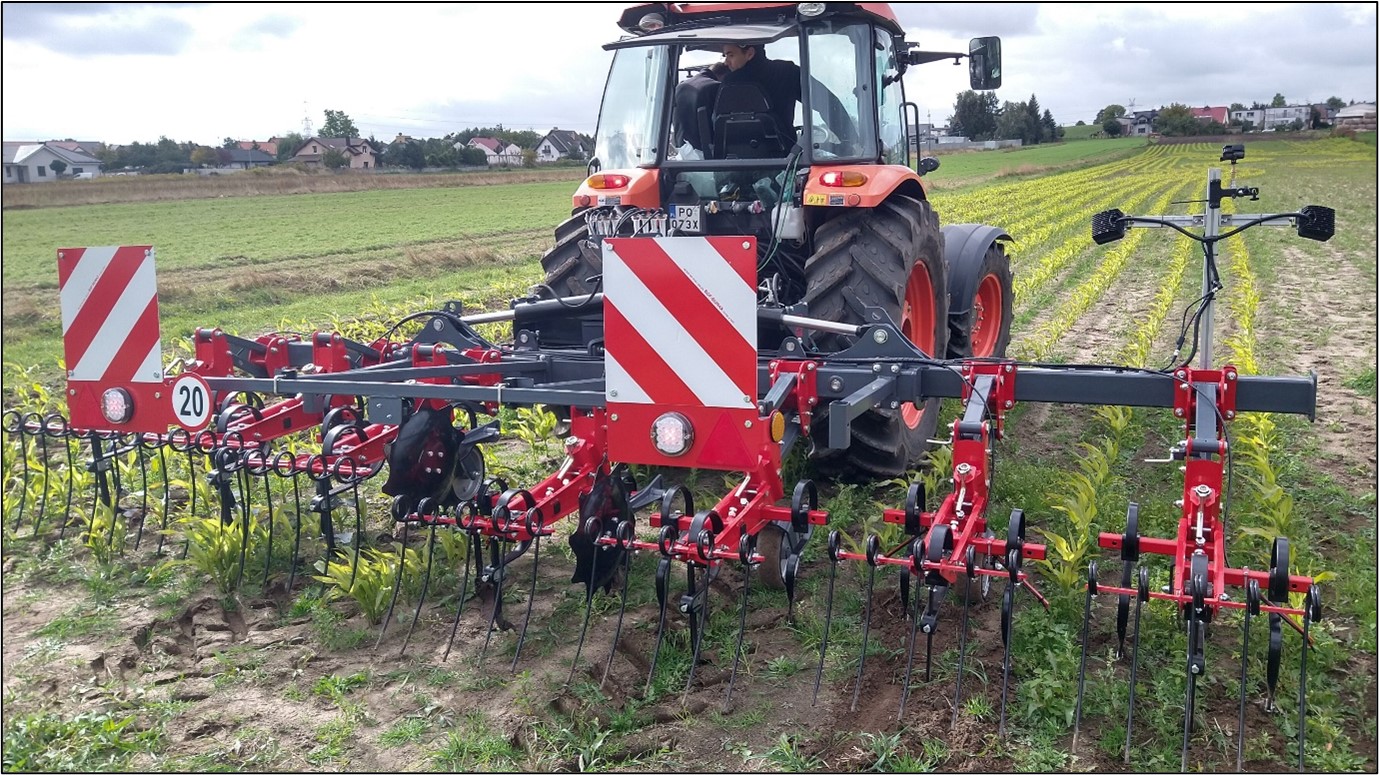
It weeds with precision, is easy to use and automatically detects rows of plants. The automatic weeder, developed by researchers at the Łukasiewicz – Poznań Institute of Technology in collaboration with Expom, is set to be launched on the market shortly.
The device can be used on all row crops, such as rapeseed, maize and sugar beet. It can handle up to twelve rows at a time.
Mechanical weeding is an environmentally friendly and highly effective method of removing weeds. It has a positive effect on plant health, as it breaks up soil crusting and improves air access to the roots. It disrupts soil capillaries, thereby reducing water evaporation.
The weeder is equipped with a camera positioned in the centre of the selected weeding section. It can operate in low light or shade. The image captured by the camera is transmitted to the machine’s computer, where a special algorithm detects the rows of plants and sends the information to the controller. The controller, in turn, controls the machine’s position. The camera can display images from two adjacent rows of plants and the two outer halves of the inter-rows.
A display is located in the tractor cab, allowing the farmer to monitor the weeding process in real time and make adjustments to the vision system. The display can show either the live camera feed or just the plants (with the background removed) – it operates in two viewing modes. The panel is equipped with the most important and essential functions – the rest happens automatically.
The cultivator is controlled via a control panel. This allows the machine to be automatically folded and unfolded, as well as centred. The machine is equipped with sensors, ensuring that the operator can be certain the cultivator is in the correct position. A hydraulic manifold enables all functions to be controlled automatically.
– The field tests we conducted went very well – says Michał Zawada, deputy head of the Research Group for Autonomous Systems at Łukasiewicz – PIT. “We carried them out under various lighting conditions and at different stages of plant growth, with the tractor and cultivator moving at speeds of up to 15 km/h. The design and every component used are resistant to shocks, dust and water, and are also adapted to harsh field conditions,” he adds.
The row marker was unveiled at the AGRO SHOW International Agricultural Exhibition in Bednary. Expom sp. z o.o. has added it to its product range. Researchers from Łukasiewicz – PIT expect the machine to undergo continuous development and refinement (e.g. with new methods for detecting rows).
FIND OUT MORE

23 October 2023
Alstom and Łukasiewicz – Poznań Institute of Technology sign a letter of intent regarding cooperation
25 October 2023
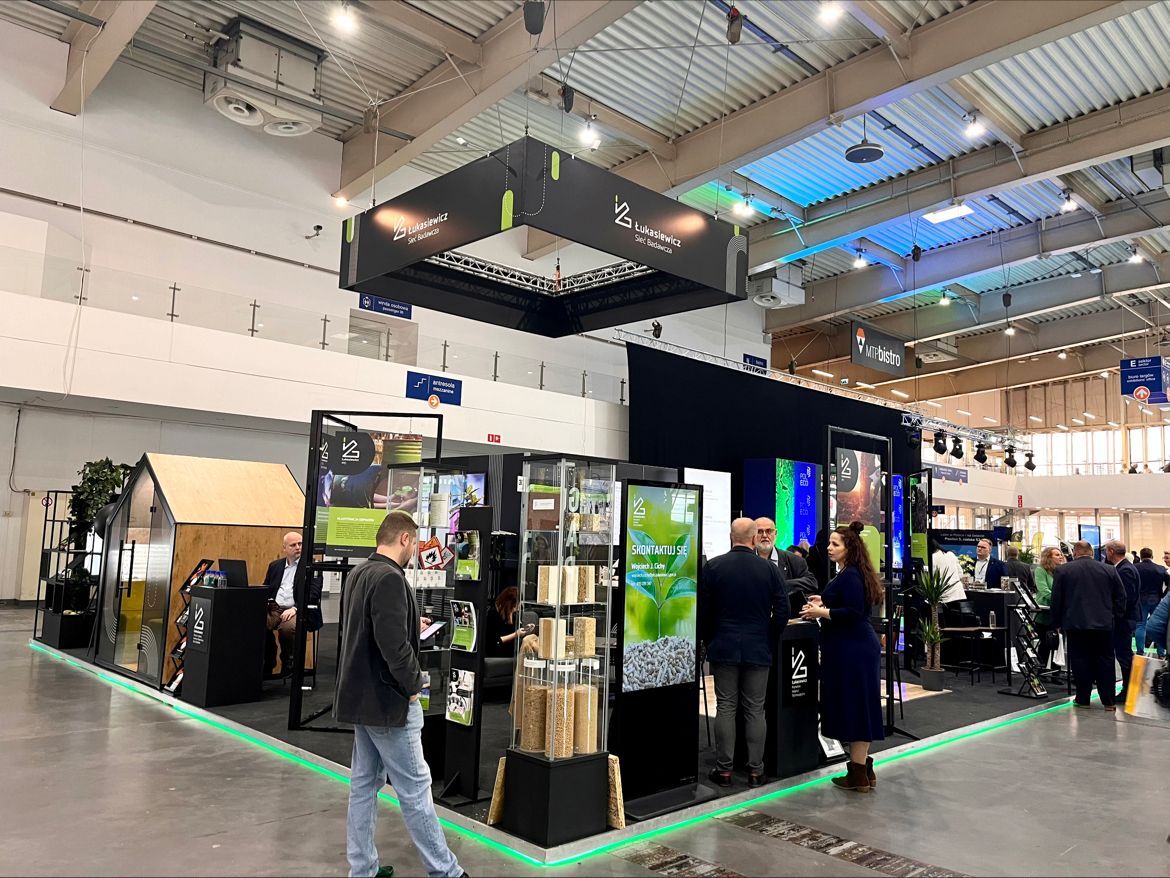
Łukasiewicz – PIT at the International Trade Fair for Environmental Protection POLECO

6 October 2023
Meeting of Food4CE project partners at Łukasiewicz – PIT
9 September 2023
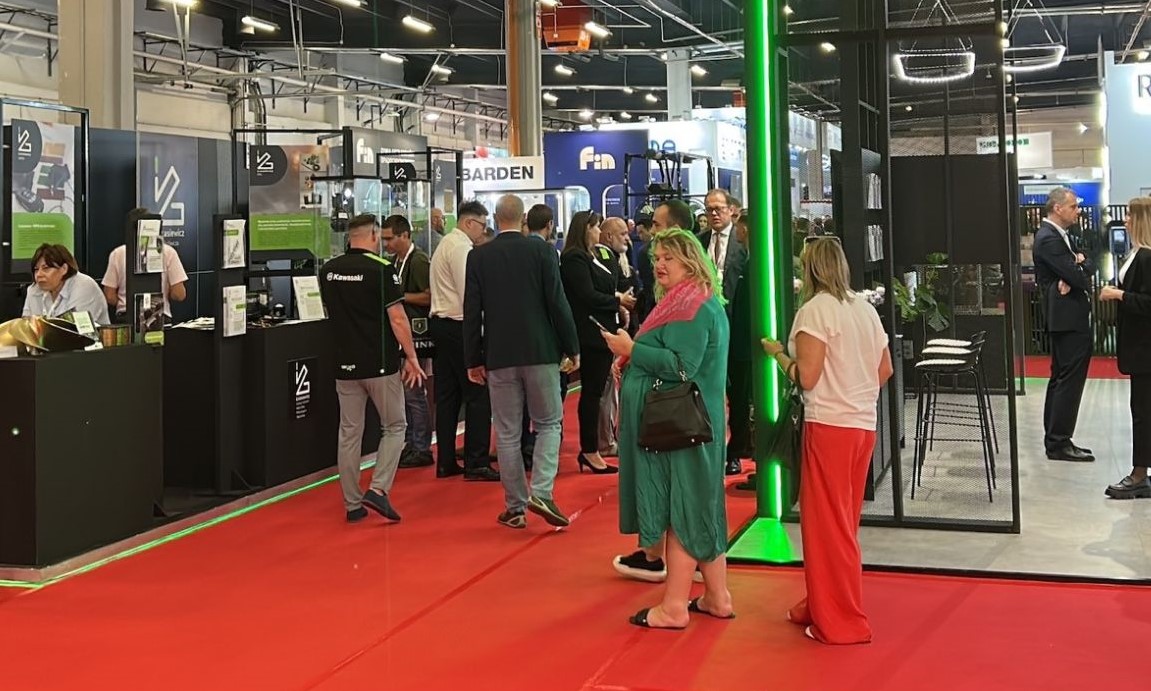
The Łukasiewicz Research Network at the International Defence Industry Exhibition
 SEE ALL NEWS