






Ultra-durable materials. Will Polish scientists conquer space?
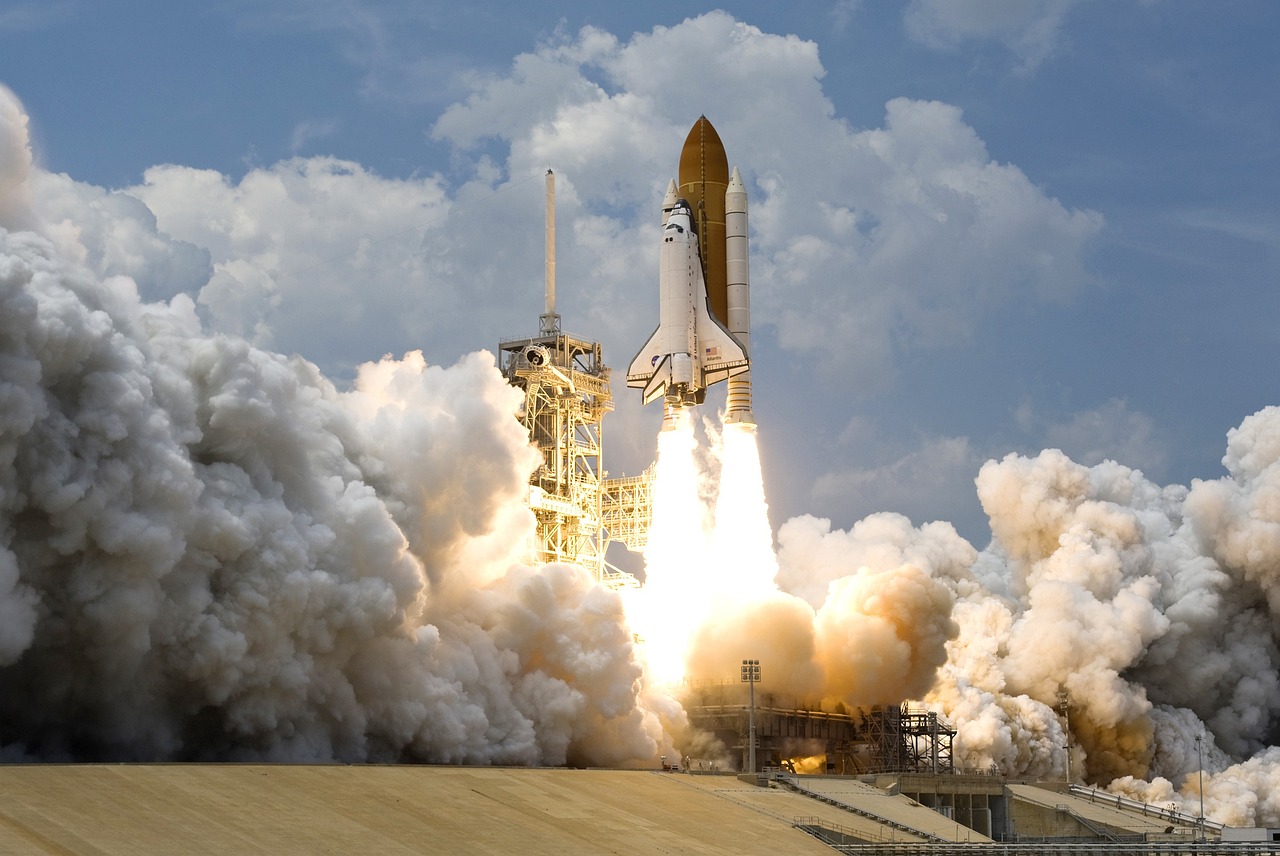
Several decades ago, space was the battleground for two superpowers – the United States and the USSR – which fought a technological war against each other. After the collapse of the USSR, rapidly developing Asian countries such as China, India, Japan, and Korea, as well as technologically advanced Europeans, entered the space race. In these regions of the world, government agencies focused on supporting domestic scientists. Across the Atlantic Ocean, however, an era of independent entities such as SpaceX began, only partially supported by the official state agency NASA.
Where do Poles fit into all this? As it turns out, we are operating on par with the biggest players in the industry. Polish students from the AGH University of Krakow have constructed an innovative Mars rover, which won last year’s European Rover Challenge competition. Meanwhile, the Perun suborbital space rocket is being built in Gdynia. It is designed to transport goods beyond the Earth’s atmosphere.
Did you know that scientists working at the Łukasiewicz Plastic Processing Center – Poznań Institute of Technology have developed a technology for producing advanced materials, including MAX phases, which have been intensively developed for about 20 years and may conquer space in the near future? But more on that in a moment.
A bit of history
Once upon a time, the division of the world was “simpler” – on both sides of the “Iron Curtain,” the Cold War arms race was in full swing, including the rapid development of space technology. On one side, we had the John F. Kennedy Space Center in Cape Canaveral, Florida, and on the other, the Soviet Baikonur Cosmodrome in the distant steppes.
April 1961 saw a breakthrough moment – the first human flight into space. Soviet cosmonaut Yuri Gagarin orbited the Earth once aboard the Vostok-1 spacecraft. However, in the following years, the Americans took the initiative. In 1968, they sent the first crew beyond Earth’s orbit. A year later, they were the first to set foot on the Moon. It was then that Neil Armstrong, stepping out of the Apollo 11 spacecraft onto the surface of Earth’s satellite, uttered the famous phrase: “That’s one small step for man, one giant leap for mankind.”
Poles in space
The only Pole who has seen the spherical Earth from the perspective of a spacecraft was Mirosław Hermaszewski. He did so on June 27, 1977, together with Soviet cosmonaut Piotr Klimuk. His mission lasted eight days. During that time, he orbited the Earth 126 times, collected a lot of data, and set several Polish records confirmed by the World Air Sports Federation (FAI). Thanks to this, he was awarded the rank of second lieutenant in the Polish People’s Army (LWP).
In 1976, the USSR authorities, in agreement with other representatives of socialist countries, decided to expand the Interkosmos space flight program and allow various representatives of the Eastern Bloc to participate in it.
Originally, Czechoslovakia and East Germany were chosen. However, Polish decision-makers did not agree with this choice. Although the wrangling lasted a long time, and Major Hermaszewski was sent for additional tests to delay the talks, ultimately the intervention in Moscow brought the expected result, i.e., a swap with the GDR. This was helped by historical arguments (referring to the joint struggle against the Third Reich) and economic arguments (Poland’s role as an important trading partner of the USSR and the economic crisis prevailing in the country).
And so, Vladimir Remek, a representative of Czechoslovakia, became the first non-American and non-Russian to fly into space. Interestingly, he did not have the typical physique of an astronaut, being several kilograms overweight, but he had another, political argument in his favor – his father was the deputy minister of defense, and he himself was the son-in-law of the chairman of the lower house of parliament. Three months later, Mirosław Hermaszewski set off on a space journey aboard the Soyuz 30 spacecraft from Baikonur.
Today, Sławosz Uznański, a Polish astronaut, scientist, and doctor of electronics who works at the European Organization for Nuclear Research (CERN), has the opportunity to fly into space. In March 2021, our compatriot took part in the recruitment process for the European Astronaut Corps, opened by the European Space Agency (ESA). In extremely difficult eliminations, he beat 22,000 other candidates and made it into a group of 11 reserves, which is the direct backup for the 6 winners of the competition.
What connects Poland with space?
Despite the fact that Poland does not have a spaceport, i.e., a place for launching spacecraft, nor has it sent a rocket fully designed and built by itself into space, Polish scientists have made a significant contribution to the development of space technology.
According to Business Insider, there are currently as many as 400 companies and scientific and research units operating in the Polish space industry. It employs as many as 12,000 people, which represents a significant branch of the economy (at the intersection of business and science). In the last decade, Polish scientists have completed approximately 500 projects under the European Space Agency (ESA), with an estimated value of €115 million.
Our interests in space are looked after by the Polish Space Agency (POLSA). This institution was established in 2014 on the initiative of the then Ministry of Infrastructure and Development. Its headquarters are located in Gdańsk, but it also has regional branches in Warsaw and Rzeszów. The agency promotes the potential and achievements of Polish space sector entities at major industry events and sponsors the most interesting initiatives.
The Rover from Krakow
The vision of conquering Mars, the planet closest to Earth, and discovering new forms of life there has long left its mark on popular culture. There have been films (such as “The Martian” or “Mission to Mars”), computer games (“Occupy Mars: The Game”), and books. However, we have still not colonized the Red Planet. In fact, we haven’t even set foot on it… So far, the only “earthly” things that have landed on Mars are vehicles sent there by NASA scientists, including the Perseverance rover, which is exploring the Jezero crater, and the Curiosity research laboratory.
Currently, the world of technology is being conquered by the Kalman rover designed by students from the AGH University of Krakow. Last year, this project won the prestigious European Rover Challenge competition. Their vehicle beat 18 competitors from Europe. Later, it took 4th place in the University Rover Challenge, being the best European project. Recently, the Krakow designers achieved another success – victory in the International Rover Challenge in India, where they competed against numerous competitors from around the world.
The “Kalman” rover can collect samples for analysis, precisely place objects in a designated space, navigate an unknown route using arrows, find hidden objects in a setting simulating the surface of Mars, photograph them, and deliver them to the appropriate locations.
Poznań technologies for space: “Nanokanapka”
The Łukasiewicz – Poznań Institute of Technology is currently implementing the cerMAXmet project, which has developed a fast and relatively inexpensive technology for producing MAX phases, i.e., materials with great application potential in the aerospace industry.
MAX phases are produced in the form of powders or sintered materials, from which parts with complex geometries can be easily obtained by machining. These materials have attractive properties that are unattainable for classic metal alloys and pure ceramics. They will be used in places exposed to extreme operating conditions: corrosive environments, friction, X-rays, and many others, including spacecraft and, closer to home, aircraft.
The main advantage of using MAX phases is the material’s resistance to high temperatures, and even its greater strength in such conditions.
It is very difficult to obtain high-purity material on the market. The production process developed by scientists from the Plastic Processing Center in Poznań allows for obtaining a product with a purity of over 98%. Compared to competing methods, this process is shorter, carried out at a lower temperature, and consumes 80% less energy.
Out into the deep end
The cerMAXmet team, consisting of Grzegorz Kubicki, Joanna Półrolniczak, and Mateusz Marczewski, which has been operating for two years, is the winner of the second edition of the Łukasiewicz Accelerator, a program in which selected groups presented innovative business ideas. The idea of the Poznań scientists won the recognition of the jury and the audience gathered at DemoDay on September 6 last year.
In November, the team won the Deep Tech Rising Stars competition, decided during one of the most important deep tech* events in Poland. In addition to prizes from the event’s partners, the Poznań scientists received, above all, a ticket to the prestigious international technology convention Hello Tomorrow Global Summit in Paris, which brings together the “cream of the crop” of representatives from the technology industry and the academic community.
The event, held under the patronage of French President Emmanuel Macron, will take place on March 9-10. We are already keeping our fingers crossed for the representatives of Łukasiewicz – Poznań Institute of Technology, and we encourage you to do the same.
“Above all, we want the market to get to know us. Who we are, what we do, what product we are bringing there,” said Joanna Półrolniczak in the ‘Iskry Lecą’ podcast, “Deep Tech Rising Stars has given us opportunities in Poland, with local entrepreneurs and investment funds. Now we have the opportunity to show ourselves in Paris, on the international market, which is our target one,” she added.
* Deep tech refers to startups and projects based on research and development or technologically advanced engineering.
FIND OUT MORE

22 February 2023
Reverse logistics, or the green alternative for the world

1 March 2023
How can we save bees from extinction? Scientists are looking for solutions to the decline of bees

25 January 2023
The most interesting European railway lines

18 January 2023
Facts and myths about artificial intelligence. What is AI?
 SEE ALL BLOGS